Navigating the complex world of gaming PC parts can feel overwhelming, especially for busy adult gamers balancing work, family, and precious game time. You want maximum performance, great value, and a system that keeps you competitive and entertained without breaking the bank or requiring a deep dive into tech jargon. This comprehensive guide simplifies the essential components of a gaming PC, from the CPU that powers your game to the GPU that renders stunning visuals, and everything in between. We'll explore how each part contributes to your gaming experience, helping you make informed decisions whether you're building from scratch or upgrading existing hardware. Understanding these core parts is crucial for optimizing performance, troubleshooting issues, and future-proofing your setup, ensuring your gaming sessions are smooth, immersive, and truly relaxing. Stay current with 2026 trends, balancing cutting-edge tech with smart budgeting.
Top 5 natural questions about parts of a gaming pc: 1. What are the essential components of a gaming PC? 2. How much does a good gaming PC cost? 3. Is it better to build or buy a gaming PC? 4. What's the most important part of a gaming PC? 5. How do I choose parts that are compatible?What does a CPU (Central Processing Unit) do in a gaming PC?
The CPU acts as the brain of your gaming PC, responsible for executing all general instructions and calculations. In games, it manages artificial intelligence, physics, game logic, and overall system processes. A powerful CPU ensures smooth background operations, prevents bottlenecks with your graphics card, and enhances multitasking capabilities, letting you game, stream, and chat seamlessly.
Why is a powerful GPU (Graphics Processing Unit) crucial for modern gaming?
A powerful GPU is critical for modern gaming because it renders all the visual data you see on screen, from complex 3D models and textures to lighting and special effects. It directly impacts your game's resolution, graphical settings, and frame rates. Without a strong GPU, games will either look poor, run slowly, or not at all, making it the primary component for an immersive visual experience.
What role does RAM (Random Access Memory) play in gaming performance?
RAM acts as your gaming PC's short-term memory, providing fast access to data the CPU needs immediately. For gaming, sufficient RAM (typically 16GB in 2026) ensures smooth loading of game assets, prevents stuttering, and allows your system to run the game, operating system, and other applications (like Discord or a browser) simultaneously without slowdowns. Higher speeds can also offer marginal performance gains.
How do SSDs (Solid State Drives) enhance a gamer's experience compared to HDDs?
SSDs dramatically enhance a gamer's experience by providing significantly faster data access speeds than traditional HDDs. This translates to incredibly quicker boot times for your PC, much faster loading times for games and levels, and smoother transitions within games. Installing your operating system and favorite games on an SSD, especially an NVMe drive, drastically reduces waiting and maximizes playing time.
Why is the Motherboard considered the backbone of a gaming PC?
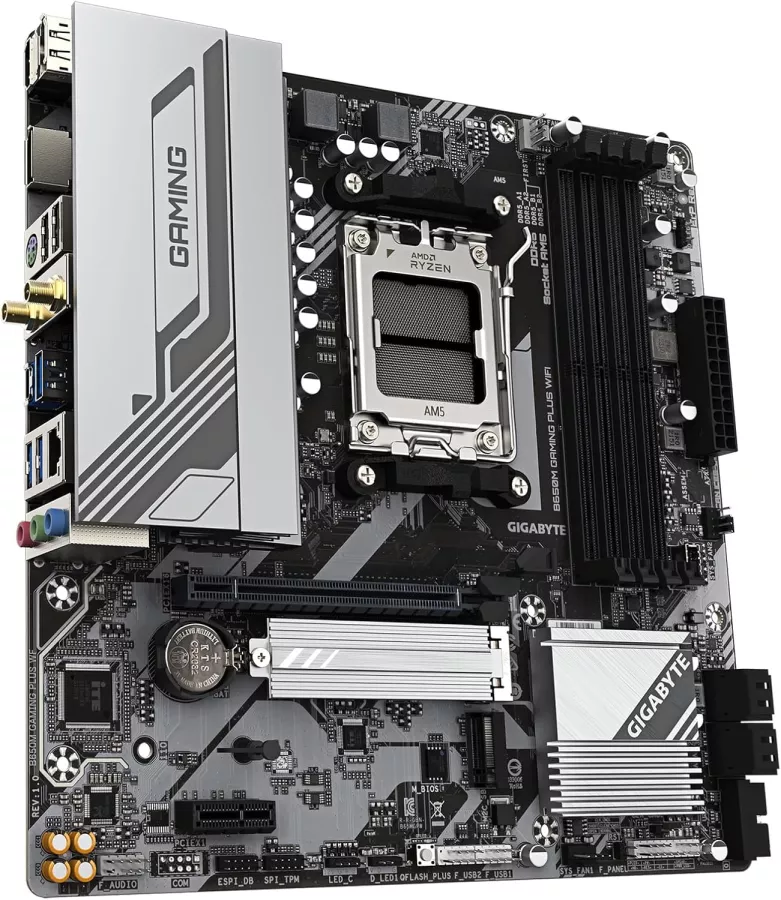
The motherboard is the backbone of a gaming PC because it's the central hub that connects and allows all other components to communicate. It houses the CPU, RAM, GPU, storage drives, and provides ports for peripherals. Choosing the right motherboard ensures compatibility between all your parts, supports necessary features like specific RAM types or NVMe slots, and facilitates future upgrades, making it fundamental to your system's integrity.
What are the main considerations for choosing a Power Supply Unit (PSU) for a gaming PC?
When choosing a PSU for a gaming PC, the main considerations are wattage, efficiency rating, and reliability. You need sufficient wattage to power all your components, especially your CPU and GPU, with a little headroom for upgrades. An 80 Plus Bronze or Gold efficiency rating is recommended for better energy use and less heat. Always prioritize a reputable brand for reliability, as a stable power supply is crucial to protect your expensive components from damage.
Why is effective cooling essential for the longevity and performance of gaming PC parts?
Effective cooling is essential for a gaming PC because high temperatures can degrade component performance (thermal throttling) and shorten their lifespan. Components like the CPU and GPU generate significant heat during intense gaming sessions. Proper cooling, whether air or liquid, dissipates this heat, allowing your hardware to run at optimal speeds consistently and ensuring your investment lasts longer, preventing frustrating slowdowns or unexpected crashes.
Hey fellow gamers! Ever feel like keeping up with the latest PC hardware is a full-time job you just don't have time for? You're not alone. Many of us, average age around 36, are juggling careers, families, and life's responsibilities, yet we still crave that escape, that fun, and that skill-building satisfaction gaming offers. We game to unwind, connect with friends, and maybe even achieve something cool online. But nothing kills that vibe faster than a stuttering frame rate or a game that simply refuses to load.
Understanding the core parts of a gaming PC might seem daunting, but it's your secret weapon for smoother gameplay, better value for your money, and less frustration. You don't need to be a tech guru to make smart choices. With 87 percent of US gamers regularly diving into virtual worlds, often for 10+ hours a week, and social gaming trends skyrocketing, having a reliable rig is more important than ever. This guide is built for you: the gamer who wants performance optimization without the hype, practical solutions for setup woes, and smart ways to upgrade on a budget. Let's demystify the parts of a gaming PC so you can get back to what you love: gaming!
What are the absolute essential parts of a gaming PC?
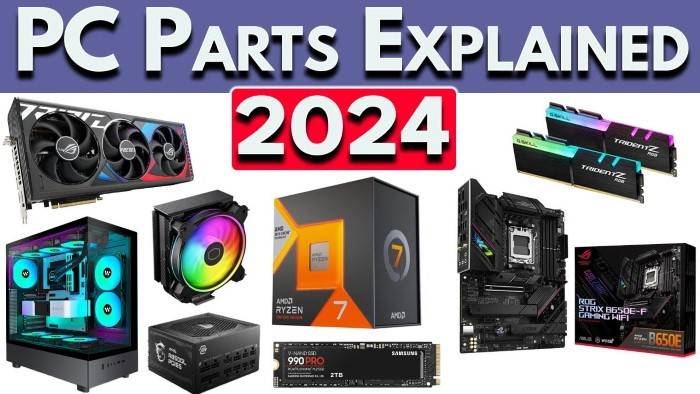
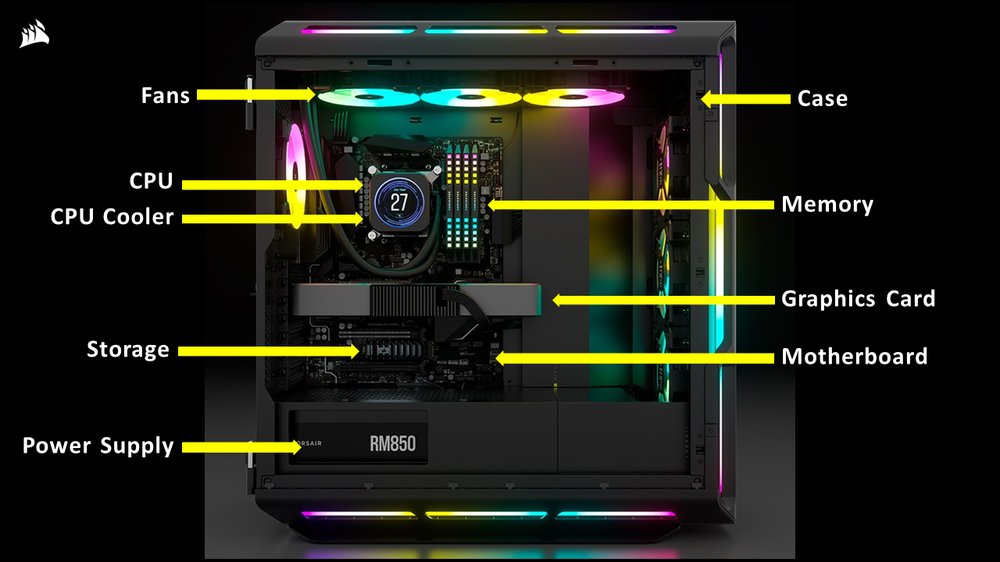
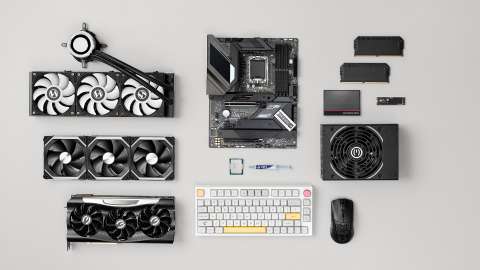
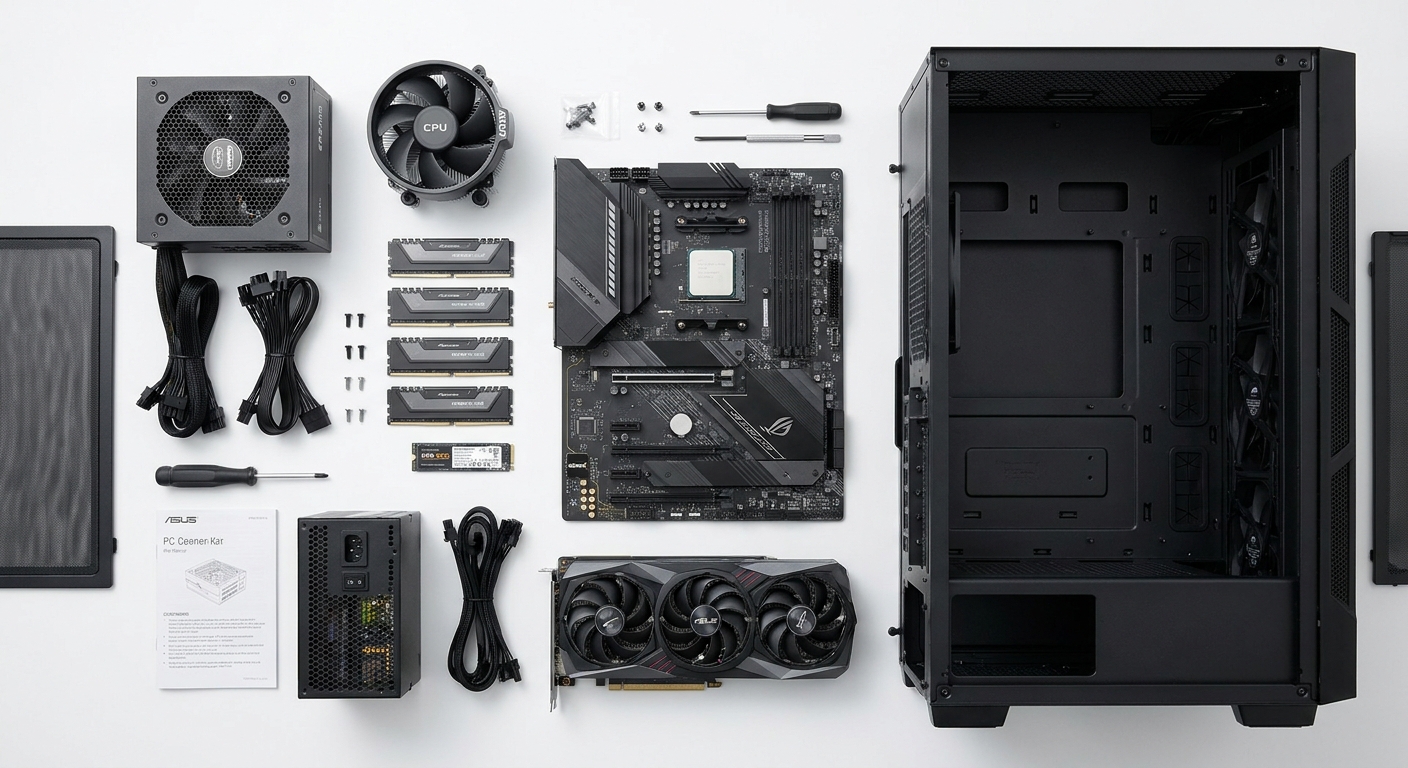
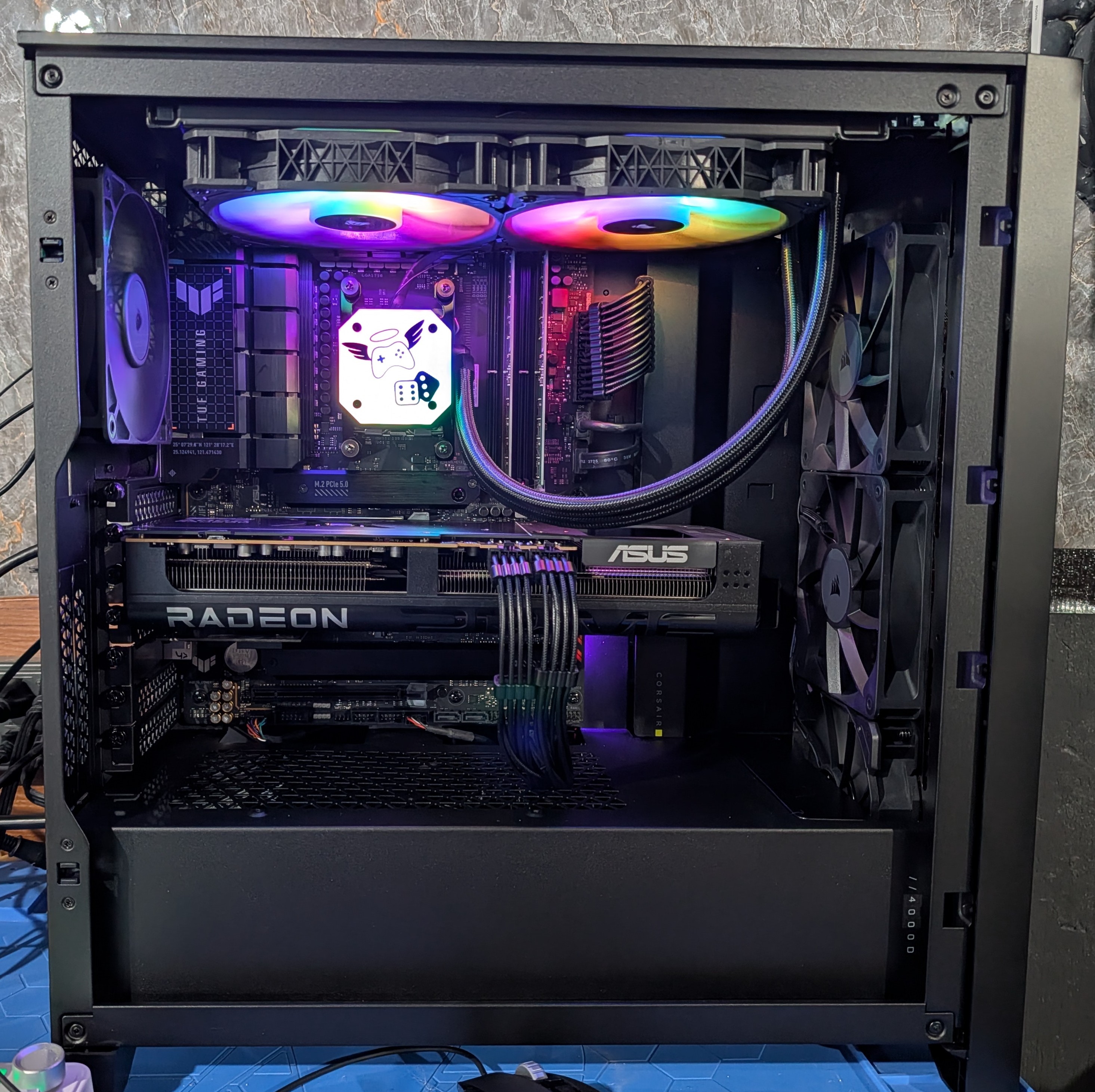
At its heart, a gaming PC relies on several critical components working in harmony. Think of them as the team players on your squad. The Central Processing Unit (CPU) is the brain, handling all general computations. The Graphics Processing Unit (GPU), often called the graphics card, is the muscle, responsible for rendering those beautiful game visuals. Random Access Memory (RAM) is your system's short-term memory, letting it quickly access data for smooth multitasking and game loading. Storage, typically an SSD these days, is where your games and operating system live permanently. All these connect to the Motherboard, the nervous system that links everything together. Finally, the Power Supply Unit (PSU) delivers electricity, and the PC Case houses it all, often with cooling solutions to keep temperatures in check.
Why is the CPU so important for gaming performance?
The CPU is crucial because it processes all game logic, artificial intelligence, physics calculations, and operating system instructions. While the GPU gets most of the glory for frames per second, a weak CPU can bottleneck even the most powerful graphics card, leading to lower frame rates or inconsistent performance. For modern games, especially those with complex simulations or large multiplayer environments, a robust multi-core CPU ensures smooth gameplay, reduces loading times, and prevents stutters. Gamers balancing gaming with work often appreciate a strong CPU for multitasking, running Discord, streaming software, or productivity applications in the background.
How does the GPU impact my gaming experience and why is it so costly?
The GPU, or graphics card, is arguably the single most important component for visual fidelity and frame rates in gaming. It handles the immense amount of mathematical computations required to render 3D graphics, textures, and effects on your screen. A powerful GPU means you can play games at higher resolutions (like 1440p or 4K), with more detailed settings (ultra shadows, realistic reflections), and at smoother frame rates. GPUs are costly because they are highly specialized processors with thousands of cores, massive amounts of dedicated high-speed memory (VRAM), and complex cooling systems. Ongoing demand, especially with current trends in AI and content creation also utilizing GPU power, keeps prices elevated. It's often the biggest investment in a gaming PC, but it directly translates to a more immersive and visually stunning experience.
Which type of storage is best for gaming and why?
For gaming, Solid State Drives (SSDs) are the undisputed champions. Forget traditional Hard Disk Drives (HDDs) for your primary game storage. SSDs use flash memory, offering significantly faster boot times, game loading, and level transitions. This means less waiting and more playing, a huge plus for gamers with limited time. Specifically, NVMe SSDs, which connect directly to your motherboard via a PCIe slot, offer even faster speeds than SATA SSDs. Installing your operating system and your most frequently played games on an NVMe SSD will dramatically improve your system's responsiveness. HDDs can still be useful for bulk storage of media or older, less demanding games, but for current titles, an SSD is non-negotiable.
What RAM capacity and speed do I need for a solid gaming PC in 2026?
In 2026, for a solid gaming PC that handles modern titles and multitasking, 16GB of RAM is generally the minimum recommended. This allows you to run demanding games alongside your browser, Discord, and other essential apps without performance hiccups. However, if you're into streaming, heavy content creation, or playing exceptionally resource-intensive titles (especially those embracing future VR experiments), 32GB is becoming increasingly beneficial for future-proofing. As for speed, aim for DDR4 RAM with speeds of 3200MHz or 3600MHz, or if you're building a cutting-edge DDR5 system, look for 6000MHz or higher. Higher speeds contribute to better frame rates and overall system responsiveness, especially with certain CPUs.
How do I pick the right Motherboard for my gaming PC build?
The motherboard is like the central nervous system of your PC, connecting every component. When choosing one, first ensure it's compatible with your chosen CPU (e.g., Intel's LGA1700 socket or AMD's AM5 socket). Next, consider the chipset, which dictates features like USB port availability, PCIe lane support for your GPU and NVMe SSDs, and overclocking potential. Look for enough RAM slots (usually 2 or 4) and M.2 slots for your storage needs. Also, factor in connectivity options like Wi-Fi 6E, Bluetooth, and sufficient USB ports for all your peripherals. Don't overspend on an ultra high-end board if you're on a budget, but ensure it has all the necessary features and upgrade paths for your current and future plans.
What are the different types of cooling for a gaming PC and which is best?
Effective cooling is vital to prevent thermal throttling and ensure optimal performance and longevity for your components. There are two main types: Air Cooling and Liquid Cooling (All-in-One AIO or custom loops). Air coolers use heatsinks and fans to dissipate heat from the CPU. They are generally more affordable, reliable, and easier to install. Liquid coolers, especially AIOs, use a pump, radiator, and fans to circulate a coolant, often offering superior cooling performance and a cleaner aesthetic. For most gamers, a good quality air cooler is perfectly adequate and quiet. However, for high-end CPUs, overclocking, or smaller cases where airflow is restricted, an AIO liquid cooler can provide better thermal management. Custom liquid loops offer the best performance and aesthetics but are complex and expensive.
How do I budget effectively for gaming PC parts without compromising too much?
Budgeting for gaming PC parts requires smart compromises, especially for gamers balancing life and expenses. Prioritize your GPU and CPU, as these have the biggest impact on gaming performance. Allocate the largest portion of your budget here. Next, invest in an NVMe SSD for your primary drive; the speed difference is invaluable. For RAM, 16GB is a good starting point, upgrading to 32GB later if needed. Don't cheap out on the Power Supply Unit (PSU); a reliable PSU protects your components. Cases can be more flexible; a functional case with good airflow is better than an expensive, flashy one if money is tight. Look for sales, consider slightly older generations of components that offer excellent value, and read reviews to find the sweet spot between price and performance. Remember, a balanced system is key; don't put a high-end GPU with a weak CPU.
Are there specific parts I should prioritize for social gaming and streaming?
For social gaming and streaming, certain parts deserve extra attention. Your CPU becomes even more critical, as streaming software like OBS uses CPU cycles to encode video while you game. A CPU with more cores and threads (like an Intel Core i7/i9 or AMD Ryzen 7/9) will handle this workload much better, preventing frame drops in your stream. Your RAM should lean towards 32GB for smoother multitasking. While your GPU still drives game visuals, newer GPUs often have dedicated encoders (like NVIDIA's NVENC or AMD's AMF) that can offload streaming tasks, freeing up your CPU. Fast, ample storage is also important for saving recordings, and a reliable network card (or wired Ethernet) is essential for stable streaming upload speeds. A good quality microphone and webcam, though peripherals, are also vital for an engaging stream.
What about compatibility? How do I ensure all my parts work together?
Ensuring compatibility between parts is one of the trickiest aspects of building a PC, but it's manageable. The main compatibility points are: CPU socket type (e.g., LGA1700 or AM5) and chipset (e.g., B650, Z790) must match the motherboard. RAM type (DDR4 or DDR5) and speed must be supported by both your CPU and motherboard. Your PSU needs enough wattage for all components, especially your GPU, and the correct connectors. Your chosen GPU needs to physically fit within your PC case, and your CPU cooler must fit both your CPU socket and within the case's height clearance. Online PC building tools (like PCPartPicker) are invaluable; they will automatically flag most compatibility issues, making the process much easier for first-time builders.
So, there you have it! Understanding the parts of a gaming PC doesn't have to be a headache. By focusing on your core needs and prioritizing smart investments, you can build or upgrade a rig that delivers the performance you crave without the stress. Remember, it's about finding that sweet spot where relaxation, fun, and performance meet your budget and lifestyle. Keep an eye on those gaming trends like the rise of social/cozy games and F2P titles, and ensure your system can handle the games you enjoy most.
What's your biggest gaming challenge when it comes to hardware? Comment below! Share your tips or questions.
FAQ Section
Q: Is a prebuilt gaming PC a good option for busy gamers?
A: Yes, for many busy gamers, prebuilt PCs offer convenience, professional assembly, and often a warranty, saving valuable time. While sometimes slightly more expensive, the peace of mind and immediate readiness can be well worth it.
Q: How often should I upgrade my gaming PC parts?
A: Most gamers find that upgrading key components like the GPU or CPU every 2-4 years strikes a good balance between performance and cost. RAM and storage upgrades can be done as needed for specific games or tasks.
Q: Can I use my gaming PC for work and productivity too?
A: Absolutely! Gaming PCs are typically powerful enough for demanding work tasks, video editing, and graphic design. A strong CPU, ample RAM, and fast storage make them excellent multi-purpose machines, perfectly suiting those who balance work and play.
Q: What is a bottleneck in a gaming PC?
A: A bottleneck occurs when one component limits the performance of another, more powerful component. For example, a weak CPU might 'bottleneck' a high-end GPU, preventing it from reaching its full potential and resulting in lower-than-expected frame rates.
Q: Should I prioritize 4K resolution or high refresh rates (Hz)?
A: This depends on your preference. 4K offers stunning visual clarity, while high refresh rates (120Hz, 144Hz+) provide smoother, more responsive gameplay. Many competitive gamers prefer high refresh rates, while single-player experience enthusiasts might lean towards 4K for immersion. Your GPU's power dictates what's achievable.
Q: Is it okay to buy used gaming PC parts?
A: Buying used parts, especially GPUs and CPUs, can offer significant savings. However, proceed with caution: always buy from reputable sellers, check for warranties, and thoroughly test components upon arrival to avoid issues. PSU and storage are generally safer to buy new.
Essential gaming PC components explained, performance impact of CPU and GPU, choosing the right RAM and storage, power supply and cooling considerations, budget-friendly upgrade strategies, optimizing for social and competitive play, balancing hardware for work and gaming needs, future-proofing your setup.
34


Gaming PC Components Explained Alex Davis PCs The Anatomy Of A Gaming PC 4526ff08 0167 49c5 9b7b . Budget DIY Gaming PC Building Guide 2025 Modern Gamer Affordable Gaming Pc Parts . How To Choose Parts For A Gaming PC Build How To Choose Parts For A Gaming PC 768x358 . The Ultimate Guide To Finding The Best Gaming PC A Gaming PC Components . What Are The Components Of A Gaming Pc At Carlos Brookover Blog Best Buy PC Gaming .width 000.format Jpeg

How To Build A Gaming PC 2026 Beginner Guide How To Build A Gaming Pc . White PC Build Guide Best White Parts For 2026 Complete White PC Build With RGB Lighting And Modern Components . The Ultimate Guide To Building A Gaming PC A Step By Step Guide Bios S9 U05 03 Overhead Pc Components Original Rwd .web .480.270 . What Are The Main Parts Of A Gaming Pc At Amber Mairinger Blog . Best Gaming PC Builds For 2026 Best Gaming PC Builds For 2026.webp

Gaming PC Build For 2026 Best PC Parts And High Performance Tips For Gaming Pc Tower . 20 000 Budget Gaming PC Build Guide Philippines 2026 PC PARTS MANILA Budget Build Scaled . 7 Best Custom Gaming PC Parts Of 2026 Top Custom Gaming Components . How To Build A Budget Gaming PC In 2026 Complete Guide A10 Build Hero 1780570904 . Budget Gaming PC Build 2026 Full Parts List Under 1 000 Best Budget Gaming Pc Build 2026.webp
The Ultimate Gaming PC Build 2026 Guide By Xidax 1 Unnamed . Best PC Builds For Gaming 2026 Ultimate Guide To Building Your Dream Best PC Builds For Gaming 2026 1024x683 . 1491 Mid Range Gaming PC Build Guide February 2026 GamersNexus 81D9q BzUML. AC SL1500 .webp. How To Choose The Right Gaming PC In 2026 Complete Guide Complete Guide . How To Choose PC Parts In 2026 Guide Build Smart How To Choose The Right PC Parts For Your First Build 2025 Guide


Awesome All In Ones Potent Components The Top Desktops And PC Parts. How To Build Your Own Gaming PC STEP BY STEP GUIDE Business Insider. Best Gaming PC Specs June 2026 Expert Component Guide Featured Image S2hbx2e1 300x210 . What Are The Components Of A Gaming Pc At Carlos Brookover Blog . How To Build A Gaming PC 2025 And All The Parts You Need How To Build A Gaming PC 768x1483

Building A Gaming PC In 2026 Is DIFFERENT YouTube . How To Build A Gaming PC In 2026 Complete Parts Guide And Assembly Image. The Complete Custom PC Building Guide For 2026 Alexandria Customs Pc 4136383 1920 . Awesome All In Ones Potent Components The Top Desktops And PC Parts. ExtraLife 2026 Build PC Building Parts AMD Gaming

Blog CLX Gaming Ddr4 Gaming Pc Viability 2026 Small . 2500 Gaming PC Build 2026 Premium Gaming PC For 4K Content 2500 Gaming Pc Build 2026 Hero . How To Build A Future Proof Gaming PC In 2026 Complete Custom Build Guide PC . Gaming PC Parts Explained A Beginner S Guide To Gaming Computer